
Kanban Board
Effective Examples for Lean Industry Efficiency
As ORGATEX GmbH, the European market leader for the Lean Industry, we understand the critical role that efficient working environments play in achieving operational excellence. This comprehensive guide delves into the Kanban Board, a powerful visualization tool that has transformed project management and workflow optimization across various sectors, including mechanical engineering and logistics.
Understanding the Kanban Board
What is a Kanban Board?
A Kanban Board is a visual project management tool designed to manage and optimize workflow by making work items visible and tracking their progress from "to do" to "done," showing how a kanban board is used in agile practices. Originating from the Toyota Production System, the Kanban method is now a cornerstone of agile methodologies, enabling teams to enhance productivity and streamline processes. Whether you use a physical board with sticky notes or a sophisticated digital Kanban solution, the core principle remains the same: visualize work, limit Work In Progress (WIP), and maximize efficiency.

The Importance of Kanban Boards in Lean Methodology
In the realm of lean methodology, Kanban Boards are indispensable for identifying and eliminating bottlenecks, thereby reducing waste and improving overall workflow. For ORGATEX customers in mechanical engineering and logistics, employing Kanban Boards means achieving greater transparency in material flow and order fulfillment, akin to the benefits seen with scrum methodologies. This visualization allows team members to quickly grasp project statuses, collaborate more effectively, and continuously optimize their processes, leading to significant gains in productivity and operational agility.


Key Components of a Kanban Board
Effective Kanban Boards include several fundamental components that facilitate seamless project management. These typically involve columns representing different stages of a workflow, such as "To Do," "In Progress," and "Done." Each work item is represented by a Kanban card, which moves from left to right across these columns, signaling its progression. Crucially, WIP limits are established for each column to prevent overburdening team members and to highlight bottlenecks proactively, ensuring a smooth and efficient flow of work, especially when integrated with scrum methodologies.
Types of Kanban Boards
Physical Kanban Boards
At ORGATEX, we recognize the enduring value of physical Kanban Boards, especially in manufacturing and logistics environments where tangible interaction is often preferred, yet we also advocate for the use of digital boards for enhanced flexibility. These boards typically leverage a whiteboard or dedicated wall space, utilizing sticky notes or ORGATEX’s specialized Kanban cards to represent each work item, which can also be adapted for use in digital boards. A physical Kanban Board offers an immediate, highly visible overview of workflow, making it an excellent tool for team members to collaboratively manage tasks and identify bottlenecks as they work on a kanban board. Their simplicity and directness are particularly beneficial for visualizing statuses at workstations and staging areas, ensuring that everyone involved has a clear understanding of the current operational landscape.
Online Kanban Boards
In today’s interconnected world, digital Kanban Boards have become essential for distributed teams and complex project management. Tools like ORGATEX’s digital Kanban solutions offer unparalleled flexibility, allowing project managers and team members to access and update the workflow from any location. These online platforms are ideal for managing diverse work items, from software development tasks to logistics planning, providing robust features for tracking progress, setting WIP limits, and generating reports. A digital Kanban Board integrates seamlessly with other project management tools, enhancing productivity and supporting agile project management across the entire organization, ensuring efficient operations for our customers in mechanical engineering and beyond.
Best Kanban Boards for Various Industries
Choosing the best Kanban Board depends heavily on the specific needs of an industry. For mechanical engineering, a physical Kanban Board with dedicated Kanban cards is often invaluable for visualizing material flow and dynamic storage location or shelving labeling directly on the shop floor. In logistics, both physical and digital Kanban Boards excel in supporting Kanban and replenishment processes, with digital solutions offering advanced features for digital goods receipt notes and order accompanying cards. ORGATEX’s expertise ensures that whether you use a physical board for hands-on team collaboration or a digital Kanban system for sophisticated project management, your Kanban Board will be optimized to enhance workflow, reduce bottlenecks, and significantly improve productivity.
Creating Your First Kanban Board
Step-by-Step Guide to Create a Kanban Board
Creating your first Kanban Board with ORGATEX is a straightforward process designed to quickly enhance your workflow and productivity. Begin by identifying your current workflow stages, which will become the columns on your board (e.g., “To Do,” “In Progress,” “Done”). Next, define the work items that need to be tracked, representing each with a Kanban card. Physically, you might use ORGATEX’s specialized Kanban cards on a dedicated board; digitally, you would input these into a Kanban software, where the kanban board is used to track progress. Establish clear WIP limits for each column to prevent bottlenecks and ensure a smooth flow. Finally, conduct regular team meetings to review progress and continuously optimize your Kanban Board, ensuring alignment with scrum practices for enhanced collaboration.
Best Practices for Using a Kanban Board
To maximize the benefits of your Kanban Board, ORGATEX recommends several best practices for how to work on a kanban board effectively. Firstly, always maintain visual clarity; ensure that each Kanban card clearly represents a single work item and that the board accurately reflects the current workflow. Secondly, strictly adhere to WIP limits to prevent overburdening team members and to highlight bottlenecks promptly. Thirdly, foster continuous improvement by regularly reviewing the board with your team, identifying areas for optimization, and adapting the workflow as needed. This agile approach, supported by a well-managed Kanban Board, significantly enhances productivity and promotes efficient project management across all levels of your organization.
Common Mistakes to Avoid When Using Kanban
While using a Kanban Board offers immense benefits, ORGATEX advises avoiding common pitfalls to ensure its effectiveness. A frequent mistake is failing to set or enforce WIP limits, which can lead to overloaded columns and negated bottleneck identification, impacting the effectiveness of your Kanban tools. Another error is neglecting to regularly update the Kanban cards, rendering the board inaccurate and misleading for team members. Furthermore, resist the temptation to make the workflow overly complex with too many columns; simplicity is key to a clear and effective Kanban Board. By avoiding these common mistakes, your team can truly harness the power of Kanban for superior project management and increased productivity.
Implementing Kanban in Your Workflow
Using Kanban Boards in Software Development
In software development, using Kanban Boards significantly enhances project management and workflow efficiency, providing a clear advantage over traditional scrum methods. Development teams leverage digital Kanban Boards to visualize every work item, from coding tasks to bug fixes, moving them left to right across columns like "Backlog," "In Development," "Testing," and "Done." This clear visualization, combined with strict WIP limits, helps prevent bottlenecks, optimize team member workload, and foster an agile project management environment. ORGATEX’s digital Kanban solutions integrate seamlessly, providing a robust platform for efficient software development and continuous improvement through advanced management software.
Support of Picking and Order Fulfillment Processes
For logistics and order fulfillment, the Kanban Board is an indispensable tool for optimizing processes. ORGATEX provides solutions that support precise picking and order fulfillment by visualizing each work item and its status. A physical Kanban Board, enhanced with ORGATEX’s specialized Kanban cards, can be used to track individual orders, ensuring that items move efficiently through picking, packing, and dispatch. This visual management drastically reduces errors, improves productivity, and helps in the swift identification of any bottleneck in the workflow, making the entire operation more agile and responsive.
Visualization of Statuses at Workstations
Visualizing statuses at workstations is crucial for maintaining a lean and efficient production environment, particularly in mechanical engineering. ORGATEX’s Kanban Board solutions allow team members to see at a glance the current state of work, from raw material availability to completed parts. Whether using a physical board with easily updated Kanban cards or integrated digital displays, this immediate visibility helps in managing WIP limits and preventing bottlenecks. This direct, actionable insight supports quick decision-making, ensuring continuous workflow optimization and enhancing overall productivity across all workstations.
Real-World Kanban Board Examples
Case Study: Material and Container Identification
In a practical application for material and container identification, ORGATEX successfully implemented a Kanban Board system for a leading mechanical engineering firm. This involved deploying specialized Kanban cards and durable physical Kanban Boards at various staging areas. Each work item, representing a container or batch of materials, was assigned a Kanban card that moved through columns like "Awaiting Processing," "In Use," and "Empty." This visual project management approach drastically reduced misplacements, improved material flow, and ensured optimal inventory levels, showcasing the Kanban method's power in a tangible industrial setting.
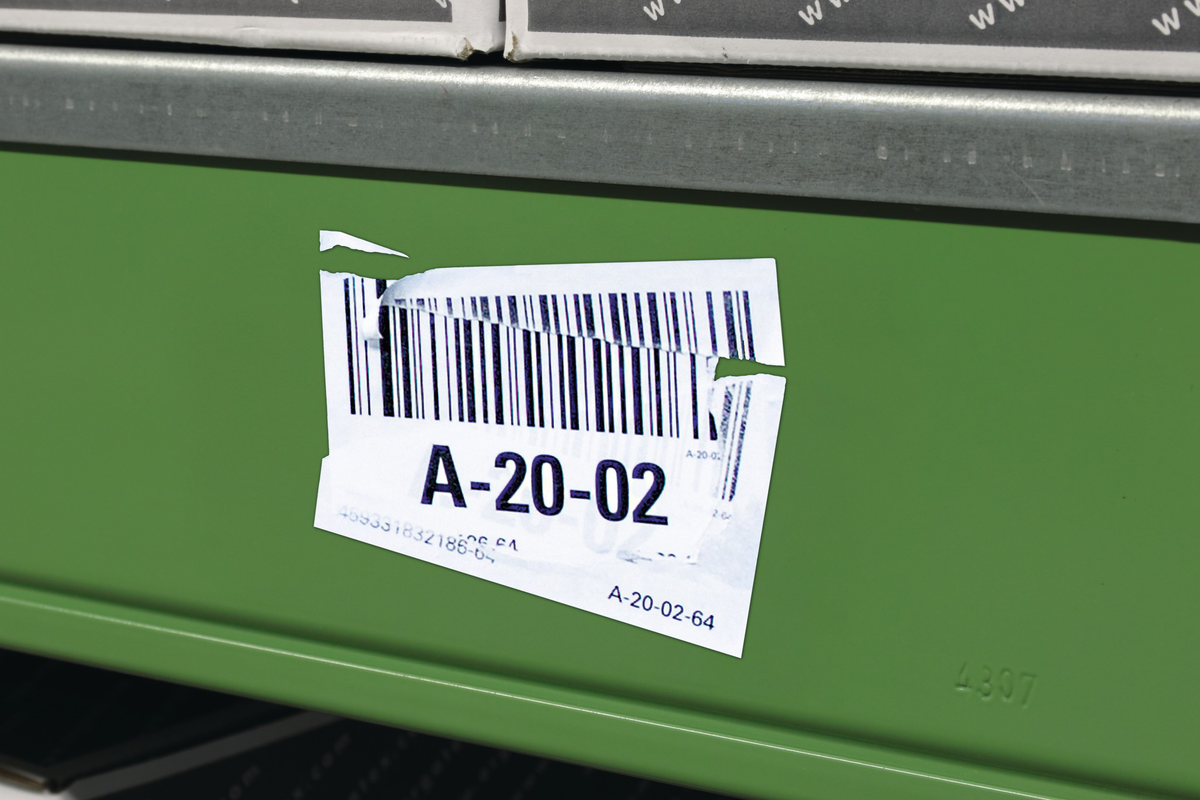
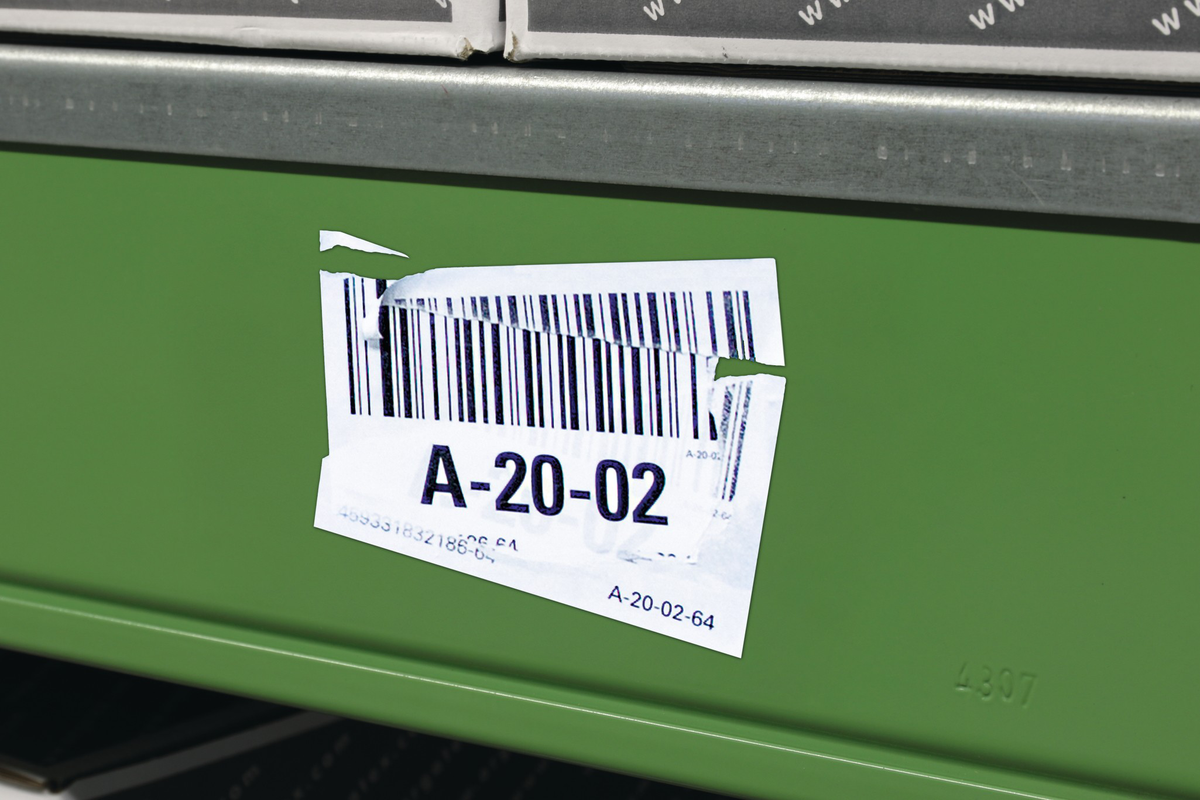
Dynamic Storage Location and Shelving Labeling
Dynamic storage location and shelving labeling are critical areas where ORGATEX’s Kanban Board solutions shine, particularly in large logistics operations, where the kanban board is used to streamline inventory management. By integrating Kanban cards with intelligent labeling systems, the Kanban Board dynamically adjusts to changing inventory needs. As work items (products) move, their corresponding Kanban cards update the storage locations on a central Kanban Board, whether physical or digital. This ensures that team members can quickly locate items, adhere to WIP limits, and prevent bottlenecks in material retrieval, thereby significantly enhancing productivity and optimizing the entire storage workflow.
Digital Goods Receipt Notes and Order Accompanying Cards
ORGATEX’s digital Kanban Board solutions revolutionize the handling of goods receipt notes and order accompanying cards in complex supply chains, integrating seamlessly with scrum board concepts and demonstrating how a kanban board is an agile tool. Instead of traditional paper documentation, each incoming shipment or order is represented as a digital work item on the Kanban Board, facilitating smoother transitions between Kanban boards vs paper methods. This digital Kanban card progresses through stages such as "Received," "Inspected," and "Stored," providing real-time visibility and a single source of truth for all team members. This approach not only streamlines the workflow and reduces administrative burden but also allows for proactive identification and resolution of any bottleneck, ensuring agile project management and enhanced productivity.
Enhancing Efficiency with ORGATEX
Support of Kanban and Replenishment Processes
ORGATEX's expertise in lean industry solutions makes us uniquely positioned to support sophisticated Kanban and replenishment processes. Our Kanban Board systems are designed to seamlessly integrate with your existing workflows, allowing for real-time visualization of work items and inventory levels, similar to popular management software like Trello. By employing our specialized Kanban cards and digital Kanban solutions, businesses can effectively manage their WIP limits, ensuring that materials are replenished precisely when needed. This proactive approach helps to eliminate bottlenecks, optimize material flow, and significantly boost productivity across all operational stages, particularly in logistics and manufacturing environments.
Using Pick/Put-to-Light Techniques
Integrating pick/put-to-light techniques with a Kanban Board system revolutionizes order fulfillment and inventory management, demonstrating how a kanban board is used in optimizing processes. ORGATEX offers advanced solutions where each work item on the Kanban Board corresponds to a specific picking or put-away task, guided by illuminated signals. This significantly enhances the efficiency and accuracy of team members in warehouse operations, allowing for better work management practices. By visualizing tasks and progress on the Kanban Board, combined with the immediacy of light guidance, businesses can drastically reduce errors, adhere to strict WIP limits, and optimize their entire picking workflow, leading to unparalleled productivity and customer satisfaction.
Call Button Functionality in Kanban Systems
The call button functionality within ORGATEX's Kanban systems offers an immediate and highly effective method for signaling needs and preventing bottlenecks. When a work item reaches a specific stage, or a component runs low, a simple press of a call button updates the digital Kanban Board, alerting relevant team members and utilizing Kanban tools for better tracking. This proactive communication ensures rapid replenishment of materials, timely intervention for process issues, or immediate task assignment. This feature significantly enhances workflow, optimizes resource allocation, and fosters an agile project management environment, showcasing the power of integrated Kanban methodology in real-world applications.
Conclusion
Recap of Kanban Board Benefits
The Kanban Board, a cornerstone of agile project management, offers a multitude of benefits that ORGATEX champions for enhanced operational efficiency. By visualizing work items and enforcing strict WIP limits, organizations can identify and eliminate bottlenecks, thereby significantly improving workflow and productivity. From material and container identification to sophisticated digital goods receipt notes, the Kanban Board transforms how teams manage tasks and collaborate. For our customers, embracing the Kanban method means achieving greater transparency, fostering continuous improvement, and ultimately driving substantial gains in profitability and market competitiveness.
Future Trends in Kanban Methodology
ORGATEX continuously monitors and innovates within the Kanban methodology to keep our clients at the forefront of efficiency. Future trends point towards even greater integration of artificial intelligence and machine learning with digital Kanban Boards, offering predictive analytics for bottleneck identification and optimized WIP limits. The evolution of smart Kanban cards and enhanced call button functionality will further streamline replenishment processes. As the European market leader, ORGATEX is committed to developing advanced Kanban software that not only supports current needs but also anticipates future demands, ensuring our customers maintain an agile project management edge.
ORGATEX Solutions for Your Kanban Needs
ORGATEX GmbH stands as your premier partner for implementing and optimizing Kanban Board solutions, ensuring effective board design tailored to your needs. With over 50 years of expertise in the Lean Industry, we offer a comprehensive suite of products, from robust physical Kanban Boards and specialized Kanban cards to cutting-edge digital Kanban software. Our solutions are meticulously designed to address specific pain points in mechanical engineering, logistics, and beyond, enhancing everything from material identification to dynamic storage labeling. Partner with ORGATEX to leverage our proven Kanban methodology, streamline your workflow, eliminate bottlenecks, and achieve unparalleled productivity and project management excellence.



FAQs on "Kanban Board"
What is a kanban board work and how does it help teams?
A kanban board work is a visual system that shows tasks moving through stages (columns) from left to right. Kanban boards allow teams to see bottlenecks, limit work in progress, and optimize flow. The principles of kanban, visualize work, limit WIP, manage flow, make policies explicit, implement feedback loops, and improve collaboratively, make kanban an agile project management tool suitable for software teams, agile teams, and kanban teams.
How do scrum teams and kanban boards work together?
Kanban and scrum can complement each other: scrum teams use timeboxed sprints while kanban boards track continuous flow. Some teams adopt “Scrumban” to blend sprint planning with the use of kanban columns and WIP limits, showcasing how kanban boards use various methodologies to enhance productivity. Kanban can help scrum teams by providing clearer visibility of work on a kanban view and improving handoffs for software developers and cross-functional software development team members.
How do software development teams use a scrum board vs kanban board work?
Software teams often choose based on cadence: scrum boards look like sprint-focused boards with planned increments and defined roles, while a kanban board work emphasizes continuous delivery and pull-based flow. Software developers on kanban boards pick the next ready task; on scrum boards they commit to sprint backlog. Both approaches use boards to make work visible and to track progress.
What are the principles of kanban that scrum boards might adopt?
Key principles of kanban that even scrum boards look to adopt include visualizing workflow with kanban columns, limiting work in progress, managing flow, and improving collaboratively. The use of kanban boards encourages teams to define explicit policies for each column on a kanban board and run regular feedback loops, which agile teams and scrum teams can incorporate to improve throughput and quality.
How can remote teams use a scrum board or digital kanban board work?
Digital boards allow remote teams to collaborate in real time, maintain a kanban view, and integrate with development tools, emphasizing how a kanban board is an agile solution for distributed teams. Remote software teams and distributed software developers use cloud-based board templates to mirror physical boards, automate status updates, and ensure the use of kanban boards for transparent tracking and asynchronous communication.
What is the simplest kanban board work to start with for personal kanban?
The simplest kanban board is a three-column board: To Do, Doing, Done. Personal kanban adapts this simplest kanban board to individual workflows, using WIP limits and prioritization, demonstrating how kanban boards use personal strategies for efficiency. This approach helps individuals and kanban teams quickly adopt the use of kanban boards and experience benefits of kanban boards without complex setup.
How does a kanban board track progress compared to a scrum board?
A kanban board tracks work by showing each item’s current column on a kanban board and using metrics like cycle time and cumulative flow diagrams. Scrum boards track sprint commitments and velocity, illustrating how kanban boards use metrics to enhance team performance. Kanban board tracks continuous delivery and flow, which can be especially helpful for maintenance, support, and continuous integration work in software teams.
What board template should software teams choose for kanban board work?
Best boards often start with a template that fits the team’s workflow: basic templates include backlog, ready, in progress, review, and done. Software development team templates may add columns for code review, QA, and deploy. Choosing a board template aligned with the team’s process and defining the column on a kanban board policies ensures clarity and consistent use of kanban boards.
What are the benefits of kanban boards for agile teams and scrum teams?
The benefits of kanban boards include improved visibility, reduced cycle times, better focus through WIP limits, and more predictable delivery. Agile teams and scrum teams that incorporate kanban can reduce waste, manage dependencies, and increase collaboration among software developers, as they work on a kanban board to visualize their tasks. Kanban boards allow continuous improvement without major role changes.
How do kanban teams measure success and what metrics does a scrum board not typically show?
Kanban teams measure success with metrics like cycle time, lead time, throughput, and work-item age. A scrum board focuses on sprint burndown and velocity, which don’t always show flow problems or hidden bottlenecks. The use of kanban boards provides a different perspective, monitoring the flow across kanban columns and enabling data-driven improvements for software teams and remote teams alike.