
Zebra crossings
- Clear pedestrian guidance in the hall: Zebra crossings mark internal crossings and ensure that pedestrians and forklifts operate clearly separately.
- Quick & easy to apply: Self-adhesive PVC strips enable robust and flexible floor marking without much effort.
- Legally recommended & low-risk: With our zebra crossings, you minimize accident risks and meet occupational health and safety requirements.
Zebra crossings
4 products
Showing 1 - 4 of 4 products


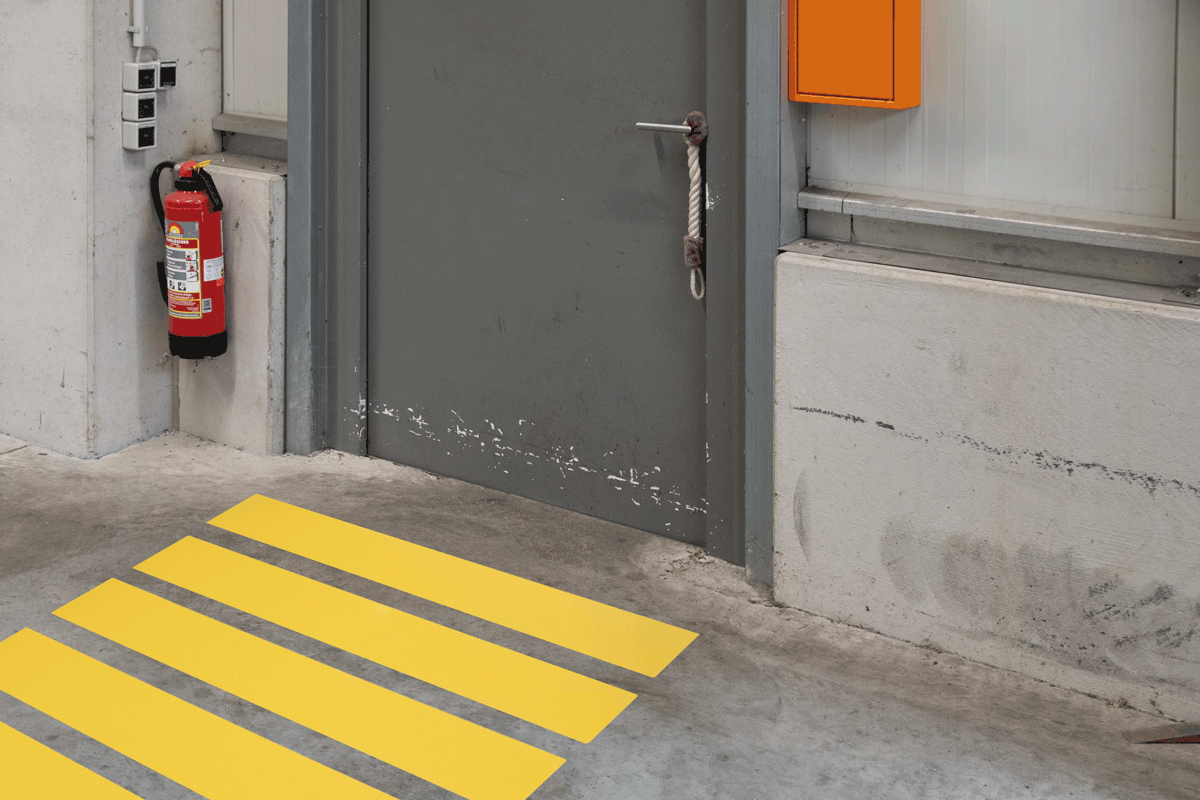
ORGATEX Zebra crossings: buy, stick on, avoid accidents
The reality in many companies is often this: The hall is used by many employees at the same time, pedestrian Forklifts and pedestrians inevitably get in each other's way. Pedestrians move to the outer edges of the paths, while forklifts drive in the middle. Near misses are common, and accidents often result in injuries or even deaths.
The particularly robust zebra crossing from ORGATEX are floor markings for safe pedestrian crossings in your hall. Simply attach them to the surface and increase safety in your facility. The quality of our products speaks for itself – see for yourself.
Zebra crossings: Do traffic regulations also apply in halls?
Blocked aisles in which material or goods are randomly placed and pedestrians on the roadway Forklifts can be dangerous. Accidents in daily operations happen quickly and are often caused by a lack of clarity on the road or failure to observe pedestrian crossings.
Accident statistics for 2021 show that there were almost 14,000 accidents involving forklifts in Germany this year. Of these, nearly 6,400 involved pedestrians being struck, run over, or crushed by a forklift (DGUV 2021).
Common causes include inappropriate behavior, excessive speed, distraction, or negligence, particularly in areas where pedestrians are already crossing. A number of unfortunate circumstances combined are also one of the main reasons for injuries.
Floor markings, such as zebra crossings, can prevent these accidents. By applying floor markings to the surface, including designated crosswalks, you can regulate traffic in your company just like you do on the streets outside. The roadway is marked in highly visible colors for your employees, tape can indicate intersections, for example, and forklifts can be moved to designated parking areas after use.
Get to know our product range: We not only offer the right floor markings according to current standards, but also for every surface and outdoor use.
What are zebra crossings?
The zebra It is a very distinctively patterned animal, which is why its name serves as the inspiration for the zebra crossing used for pedestrian crossings on roads. The pattern consists of two colors: a light and a dark one, with white paint usually applied to the dark road surface, mimicking the black and white design of a zebra crossing. This makes the zebra crossing particularly eye-catching, helping drivers to notice and yield to pedestrians at the crosswalk.
Zebra crossings from ORGATEX are a floor marking for an indoor pedestrian crossing, for example, installed in a production or logistics hall. OurstripesYellow-colored crossings are designed for high-traffic areas and are highly durable. Pedestrian crossings in the direction of travel are visually demarcated with white stripes and visible even in low-light conditions.
The use of floor markings, such as zebra crossings, ensures the safety of your employees and is prescribed by the Workplace Ordinance (ArbStättV) (Appendix) as a marking for internal traffic routes.
Yellow stripes for safe pedestrian crossings in your hall
As in road traffic In industry and production, traffic is also clearly regulated according to specific guidelines to prevent accidents. Floor markings in highly visible colors indicate, for example, the direction of travel, lanes, priority, and pedestrian crossings.
Our zebra crossings were specifically developed for industrial use. Their purpose is to provide a warning effect for your employees, ensuring they have the right of way when crossing. The yellow zebra crossings provide clear marking of pedestrian crossings in your building and are not only highly visible due to their color, but also robust and durable, ensuring that every crossing is a crosswalk marked effectively.
Floor markings for internal traffic routes
Floor markings are not only necessary for the identification of escape and rescue routes, but also for regulating areas for material storage and forklift traffic, ensuring pedestrian safety at crossings. With our zebra crossings, you can mark the roadway in your hall so that pedestrian know exactly which area they can stay in safely. In addition to zebra crossings and puffin crossings, we offer everything you need to equip your hall with safety in mind, including striped lines painted on the floor.
- Floor markings and marking tapes with high durability.
- Luminescent floor markings for areas without lighting.
- Stair nosing profiles for indoor and outdoor use.
- Information signs in various designs can include explanations of the meaning of zebra crossing to enhance safety awareness.
- Warning and safety signs for floors and walls, including those that indicate when a zebra crossing is a crosswalk.
- Reflective anti-slip tapes.
- Floor signs for every application.
- Anti-slip floor markings for asphalt or tiles, including crosswalk designs to enhance safety.
The question of occupational safety can hardly be ignored in everyday industry and production. Meaning be overestimated. Zebra crossings on the ground are part of the safety concept using floor markings and contribute to the protection of pedestrians. Learn how zebra crossings and crosswalks are used for floor marking, plan your pedestrian crossing, and regulate the interaction between pedestrians and vehicles, as you would in road traffic, where the meaning of zebra crossing is crucial for safety.
ORGATEX: Floor markings for safety and effectiveness in your company
Do you have questions aboutSecurityin your company? Our service team will be happy to advise you. Simply call or send us an email to discuss the best options for your crosswalk markings. We will plan the layout for signage in your hall in accordance with the current Workplace Ordinance and apply the appropriate floor signs and markings on-site – quickly and easily.
ORGATEX not only supplies you with floor signs, but also luminescent markings with very robust material thickness and intense luminosity, which are clearly visible even in the dark, much like a signal for motorists. We offer you solutions for digital intralogistics or material flow, such as practical FIFO stations and floor roller in the best quality.
TOP FAQs related to "Zebra Crossing"
What is a zebra crossing definition and how does it differ from other marked crosswalks?
A zebra crossing is a marked crosswalk identified by broad white stripes painted across the road, black and white posts and often Belisha beacons with flashing amber globes on black. Its zebra crossing definition emphasizes visibility with stripes on the road and gives pedestrians priority to cross the road, while other marked crosswalks may be controlled by traffic lights or include additional features like refuge islands or puffin crossings that use sensors to manage pedestrian usage.
How should road users give way at a zebra crossing and what does the Highway Code say about must give way?
The Highway Code states that drivers and cyclists must give way to pedestrians on the crossing and should be prepared to stop when someone is waiting to cross. Although motorists must stop to allow pedestrians to start crossing, they should not overtake or pass once someone has already started crossing. Failure to give way can result in penalties, including penalty points if the offence is serious.
What is the correct usage of zebra markings and black and white stripes to improve visibility?
Zebra markings use broad white stripes and sometimes black and white posts to increase visibility for both drivers and pedestrians. Good usage includes maintaining clear, unbroken stripes and functioning Belisha beacons so that the crossing is clearly seen at night and in poor weather, improving road safety for those who need to safely cross across the road.
When might puffin crossings be used instead of a zebra crossing and what are the advantages?
Puffin crossings are pedestrian crossings controlled by traffic lights and sensors that detect pedestrian presence, often used where controlled crossing is needed for higher traffic flow. The advantage over a zebra crossing is additional safety from signal control, the ability to adjust signal timings based on usage, and reduced risk for pedestrians and cyclists and pedestrians when the width of the road or traffic conditions make a zebra crossing less suitable.
Can cyclists and pedestrians both use a zebra crossing and does it allow cyclists to cross?
Zebra crossings are primarily for pedestrians to cross and the design (broad white stripes and kerb alignment) is intended for pedestrian usage; cyclists are expected to dismount and walk across or use an adjacent cycle crossing if provided. Whether it allows cyclists to cross on a bicycle varies by location, but cyclists should give priority to pedestrians and follow local rules to ensure everyone can safely cross.
How does a marked crosswalk with Belisha beacons and flashing amber affect driver behavior?
Belisha beacons—flashing amber globes on black and white posts—draw attention to the crossing and encourage drivers to slow down and be ready to stop, increasing pedestrian visibility compared with unmarked road crossings. The visual cue supports compliance with the Highway Code and makes it safer for pedestrians to cross the road, especially near schools or busy pavements where additional safety is needed.
What should pedestrians do at a zebra crossing on the side of the road and how can they safely cross?
Pedestrians should wait on the pavement at the kerb, look both ways for traffic, and step onto the crossing only when it is safe or when approaching vehicles have stopped. Ensuring visibility, using the marked crosswalk stripes and taking care with approaching cars that may not have seen you, helps pedestrians to safely cross and reduces risk from vehicles that must stop but might not.
Are there rules about parking near a zebra crossing, such as zigzag lines or restrictions?
Yes, zigzag lines are often painted either side of crossings to prevent parking or overtaking, preserving visibility for both pedestrians and drivers. These lines and parking restrictions ensure that pedestrians waiting to cross are visible and that motorists can see the crossing in plenty of time, supporting the crossing in the UK and other jurisdictions where road safety measures are enforced.
How does the presence of a refuge island or width of the road influence the type of crossing chosen?
The width of the road and the presence of a refuge island can determine whether a simple zebra crossing is appropriate or whether a controlled crossing like a puffin crossing or a crossing with a central refuge is safer. On wide roads, a refuge island allows pedestrians to cross one direction of traffic at a time and provides additional safety if vehicles must give way or if the crossing is used by school crossing patrols near busy areas.
Is a zebra crossing a crosswalk in legal terms and do pedestrians have the right to cross at Abbey Road style crossings?
In many jurisdictions a zebra crossing is legally a crosswalk and pedestrians have the right to cross once they step onto it, supported by markings, Belisha beacons and the Highway Code. Famous locations like Abbey Road are iconic zebra crossings with black and white stripes made famous by the Beatles, but the same rules about giving way to pedestrians and driver responsibilities apply everywhere to ensure that people can cross safely.